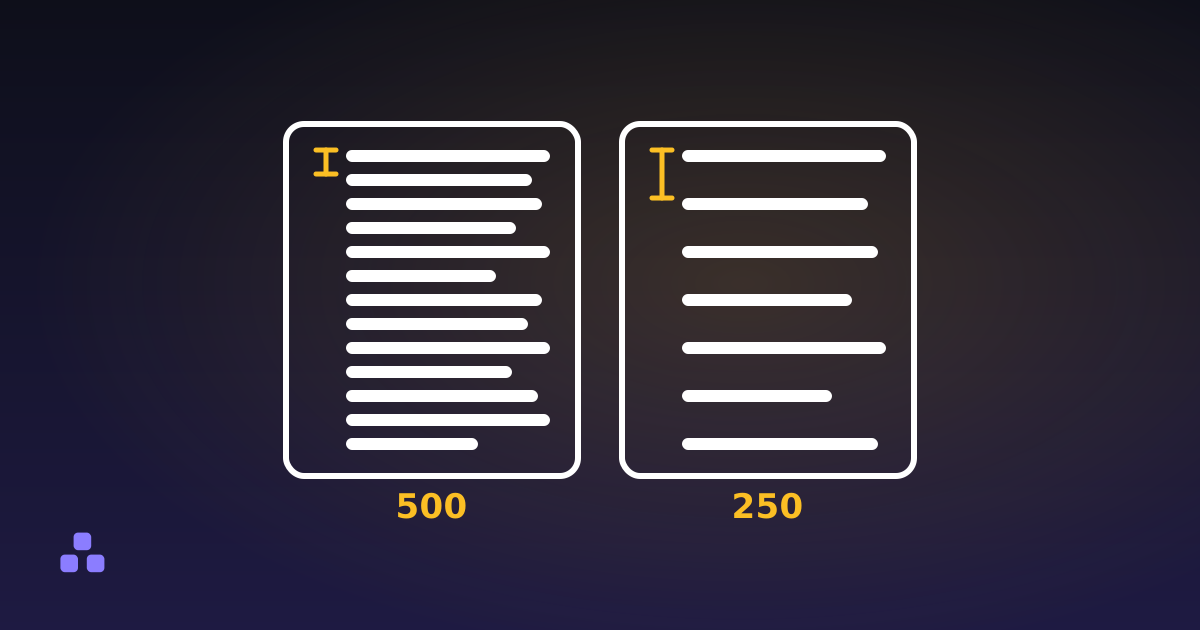
A reading-time estimate is a word count divided by a reading rate, and the range that shows up almost everywhere — 200 to 250 words a minute — is a real research figure, not a guess. What the badge leaves out is that the rate is a median for plain, general-audience prose read silently by an adult, and very little of what actually earns a reading-time badge is that plain. Technical writing, a page full of code, dense reference material — all of it reads slower than the average the badge was built on, sometimes by a wide margin.
Where does 200 to 250 words a minute come from?
The figure traces to a real body of research rather than a single study. The most cited modern version is a 2019 meta-analysis by Marc Brysbaert, published in the Journal of Memory and Language, which pooled 190 separate studies and more than 18,000 participants spanning more than a century of reading research, from 1901 to the year of publication. Silent reading of English non-fiction averaged 238 words a minute; fiction came out faster, at 260, and the gap tracks average word length rather than genre — non-fiction simply runs on longer words. Reading aloud is a different task and a slower one: a separate set of 77 studies put it at 183 words a minute.
That is noticeably below the number that circulates in blog posts and speed-reading courses — 300, sometimes 400 or 500 words a minute. Brysbaert's own summary of the field is that reading speed has been overestimated for years, with the inflated figures traced to self-reported speed and to studies that never checked whether the reader understood the page. Measured, comprehension-checked reading of ordinary prose lands closer to 200–250 than 300, which is why the word counter here uses 238 rather than a rounder, more flattering number.
Why does technical writing take longer to read?
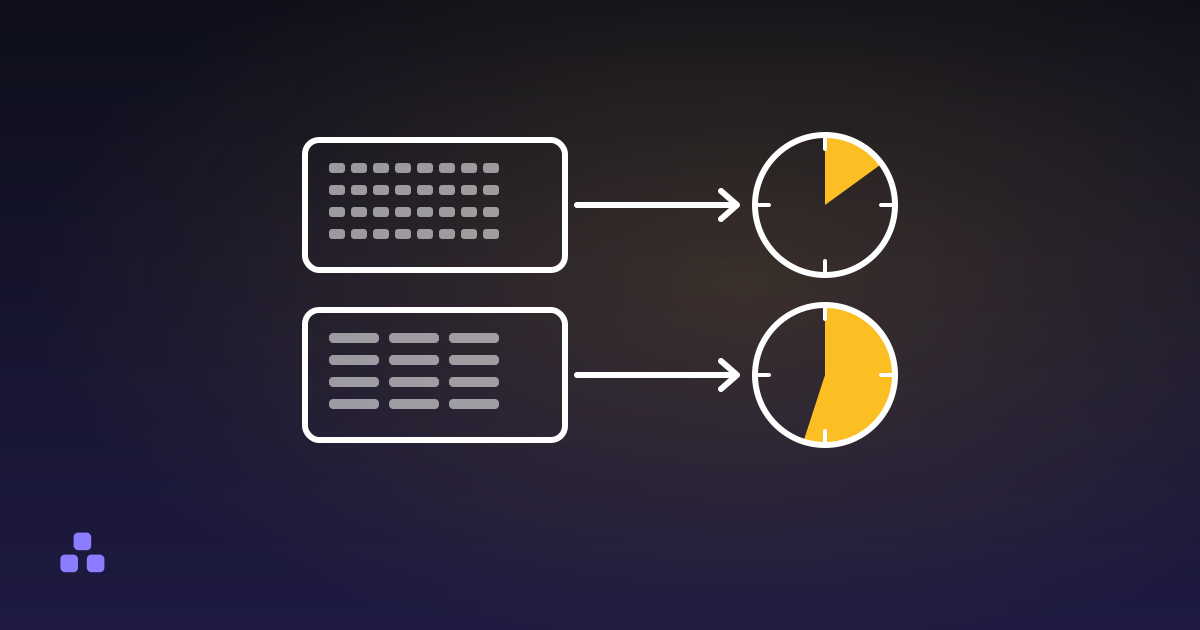
The 238 figure is an average across non-fiction in general, and the single biggest thing that pulls a specific text away from it is vocabulary. Reading rate is closely tied to word length and word familiarity: short, common words get read in one quick fixation, long or unfamiliar ones make the eye linger or double back. A changelog full of function names, a contract full of defined terms, a page dense with repeated syntax is not the plain non-fiction the average describes, and applying the average to it understates the time by more than a rounding error.
Format adds its own drag that a plain word count cannot see. Code and tables are not read at prose speed by anyone competent enough to read them at all — they get scanned, compared, cross-referenced — and a word count either treats them as ordinary prose, which overstates how fast they go, or strips them out entirely and quietly undercounts the page. Neither convention is standard, which is one more reason two counters looking at the same article can print two different numbers.
How does the badge on an article actually get calculated?
Almost every implementation does the same three steps: count the words, divide by an assumed rate, round to a readable number. The word and character counter on this site runs that arithmetic live as you type or paste, using 238 as the rate, and it is honest about the size of what it is measuring — under a minute, it shows seconds instead of rounding up to a flattering “1 min read,” the kind of rounding that turns a forty-second note into a minute nobody spent. Push it the other way, past an hour of text, and it switches to hours and minutes rather than a three-digit minute count, because “4h 12m” means something at a glance and “252 min” does not.
What the arithmetic cannot see is everything that is not a word: a video embedded halfway down the page, a diagram someone stops to study, a paragraph re-read because a number needed checking. A word count is blind to all of that, which is fine as long as the badge is read as an estimate of one specific thing — time spent moving eyes across running text — and not a promise about how long the page will actually hold anyone.
Why do two sites disagree about the same article?
Because both inputs move. The rate genuinely drops well below the non-fiction average for dense, unfamiliar text and climbs above it for easy fiction, and different publishers plant their flag at different points along that range — plenty still use a round 200 or 250 rather than Brysbaert's measured 238. The word count moves too: one counter includes the headline, the captions and the byline, another strips them out; one treats a hyphenated compound as a single word, another splits it in two. Neither site is lying to you. They are running the same formula on two different inputs and printing the answer to a false extra decimal of precision.
Does skimming change the estimate?
It should, and a word-count badge has no way to account for it. The estimate assumes linear reading from the first word to the last at a steady pace, which is not how most people move through a page on a screen. Eye-tracking research from the Nielsen Norman Group, first published in 2006 from a study of 232 users and reconfirmed more than a decade later, found readers scanning in an F-shaped pattern — two horizontal sweeps near the top followed by a vertical scan down the left side — rather than reading every line in order. A reader doing that finishes in a fraction of the badge's estimate and can still leave with the answer they came for.
None of this makes the badge wrong, exactly. It answers a narrower question than the one people read it as: not “how long will this take you” but “how long is the text, expressed in minutes instead of words.”
Should you trust a reading-time estimate?
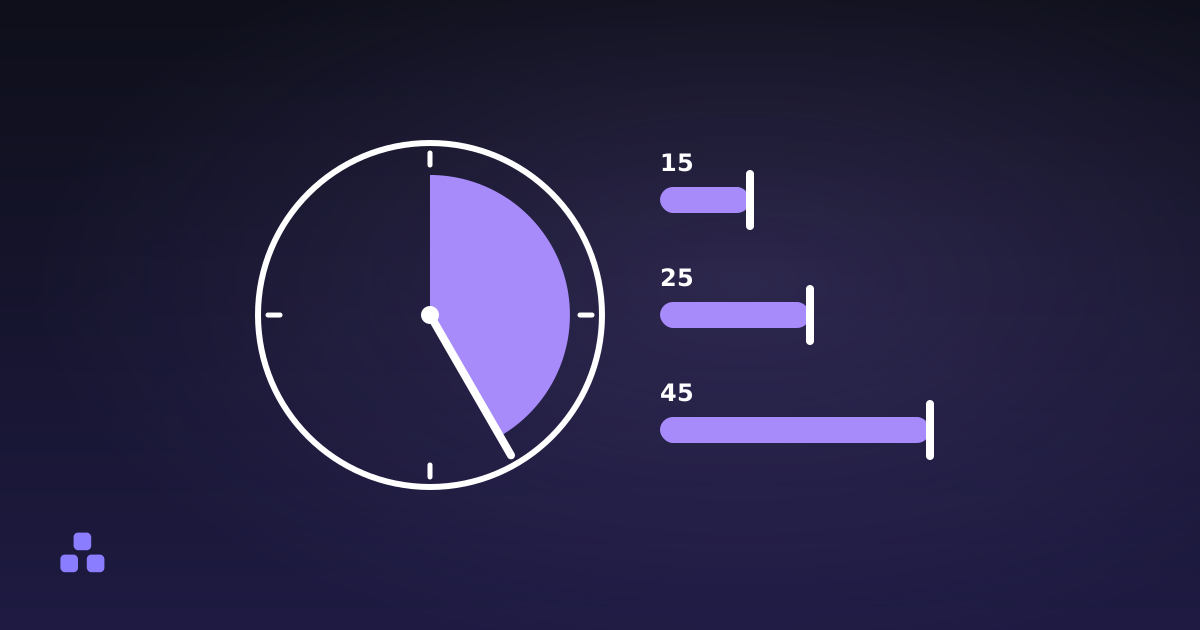
As a rough sort between a short piece and a long one, yes — a badge reading 2 minutes and one reading 20 are telling you something real. As a schedule for your own reading, no. Individual variation in reading speed is wide even inside Brysbaert's own numbers, before a single word of a specific article has been weighed in, so a rate built from someone else's median is a starting point about the text, not a prediction about you. The same shape of overreach shows up in the number attached to a Pomodoro session: twenty-five minutes looks measured because it is precise, and precision is not the same claim as accuracy.
The one thing a word count can do reliably is act as a floor. Below it sits a wide range of legitimate outcomes — skimmed in ninety seconds, read closely in six minutes, abandoned after the second paragraph — and a single number on a badge cannot tell any of those apart.
The word and character counter here shows this exact arithmetic as you type or paste — words, characters, sentences, paragraphs, and the reading time worked out from them — and it runs entirely in the tab, so a draft you paste in to check never goes anywhere else. What it will not do is tell you how long the page will actually hold someone, because that was never a question a word count alone could answer.
A word count is also the number underneath a page count, arrived at with a different multiplier: how many words fit on a page works the same arithmetic from the print side, and why the count that survives a reformat is the one worth trusting.
Frequently asked questions
How is reading time calculated?
It is a word count divided by an assumed reading rate, usually somewhere between 200 and 250 words a minute for silent adult reading of ordinary prose, rounded to a readable number. It does not measure your reading speed on that specific page — it applies someone else’s median to your word count.
Is 200 words per minute an accurate reading speed?
It is close to what controlled research measures for plain non-fiction, though a 2019 meta-analysis pooling 190 studies put the average nearer 238. Individual readers and individual texts both move a lot around that number, so treat it as a rough midpoint rather than a fact about any specific person or page.
Why do different sites show different reading times for the same article?
Because both inputs behind the estimate vary. Sites use different assumed rates — some still round to 200 or 250 rather than a measured 238 — and different word counts, depending on whether headlines, captions and hyphenated compounds are counted the same way. Neither number is wrong; they come from slightly different formulas.
Why does technical or dense writing take longer to read than the estimate suggests?
Reading speed is closely tied to word length and word familiarity. Long, unfamiliar or jargon-heavy words make the eye pause longer or double back, so a page full of them reads well below the general non-fiction average, and a plain word count has no way to detect that.
Does a reading-time estimate account for skimming?
No. It assumes linear reading from the first word to the last at a steady pace, which eye-tracking research shows is not how most people read a screen — many scan in an F-shaped pattern instead. A reader who skims can finish well inside the badge’s estimate.
Last updated September 23, 2026