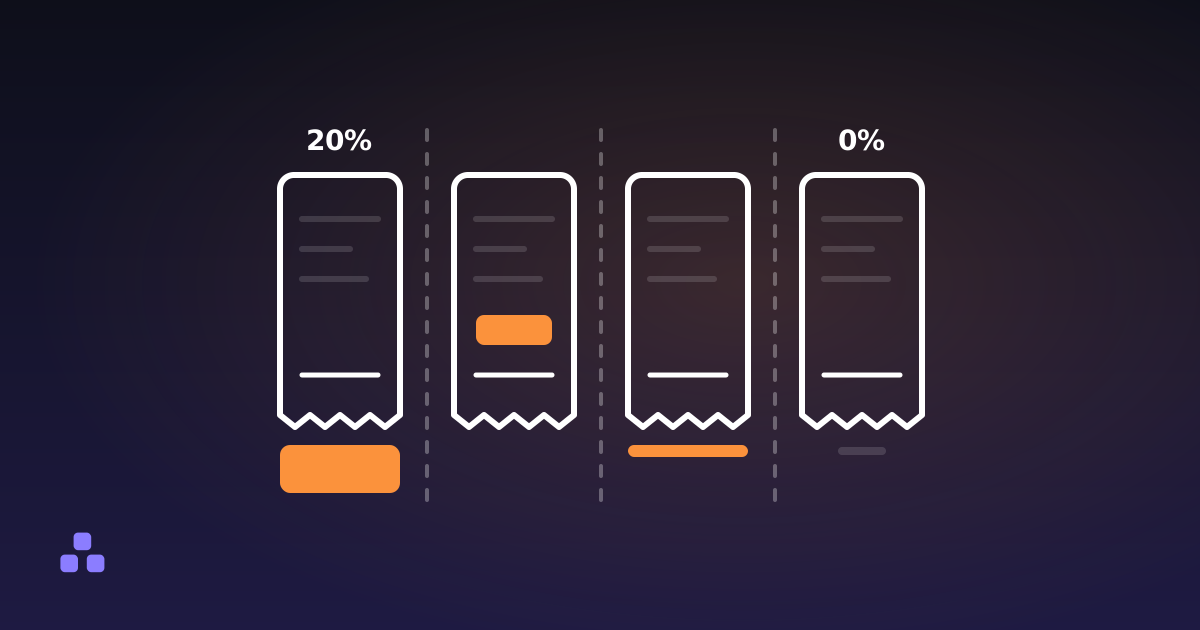
Split the bill evenly when everyone ordered about the same. When they did not, work out each person's own food, share the common dishes between the people who ate them, then add tax and tip to every share as the same percentage. Tax and tip are both a percentage of the food, so you can add the two percentages together and multiply each person's food once. Nobody has to hold a running total in their head.
When is an even split fair?
When the gaps are small, or when they even out over time. Four friends who each had a main and a drink lose nothing by dividing by four, and a group that eats together every month will find the overpayments cancel. An even split is also the only version that needs no one to be the accountant, which is worth something at a table of eight.
It stops being fair when one gap is large and one-sided. The usual cause is alcohol: one person who did not drink pays for three people who did, plus the tax and the tip on all of it. Nothing in the arithmetic makes that wrong, because fairness here is an agreement between the people at the table. The useful habit is to decide before ordering, not after the bill lands, when the person who ordered the least is least comfortable bringing it up.
How do you split by item, with tax and tip?
Take a table of four. Ana had 30.00 of food, Ben 18.00, Cleo 12.00 and Dev 20.00, and there was a 10.00 starter in the middle. Sales tax is 8% and the tip is 20%, both on the pre-tax food. The bill is 90.00 of food, 7.20 of tax and a 18.00 tip, so 115.20 in all.
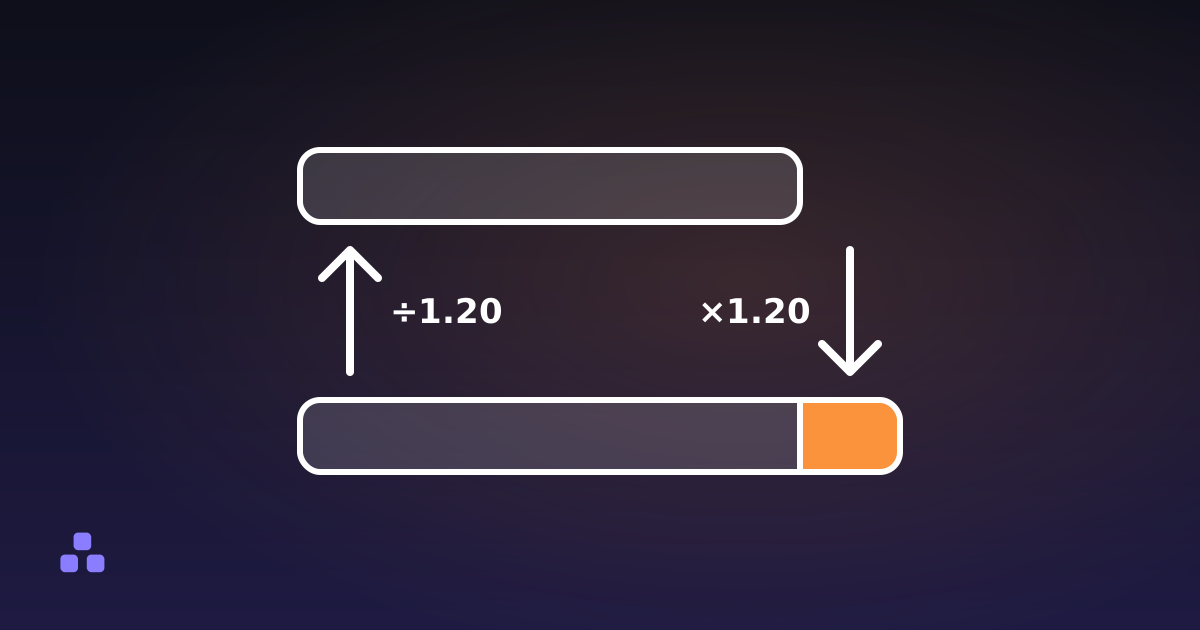
The step people get wrong is combining the two percentages. Both are taken from the same 90.00, so they add: 8% + 20% = 28%, and each person's food is multiplied by 1.28. Multiplying 1.08 by 1.20 would be 1.296, which is what you get if the tip is calculated on the price with tax already in. That is a different bill, covered below. The reason successive percentages do not add up is that the second one is taken from a bigger number, and here neither is.
| Person | Own food | A quarter of the starter | Food total | Tax and tip (28%) | Pays |
|---|---|---|---|---|---|
| Ana | 30.00 | 2.50 | 32.50 | 9.10 | 41.60 |
| Ben | 18.00 | 2.50 | 20.50 | 5.74 | 26.24 |
| Cleo | 12.00 | 2.50 | 14.50 | 4.06 | 18.56 |
| Dev | 20.00 | 2.50 | 22.50 | 6.30 | 28.80 |
| Table | 80.00 | 10.00 | 90.00 | 25.20 | 115.20 |
The even split of the same bill is 28.80 each. Cleo pays 10.24 more than her own food justifies, Ben 2.56 more, and Ana 12.80 less. Dev lands exactly on 28.80, which is a coincidence of these numbers and not a rule. Check your own table the same way: the last column has to add up to the total on the receipt, and if it does not, one line is wrong.
Who pays for the shared starter?
Whoever ate it, in proportion to how much they ate, and that is the part no formula settles. There are three defensible rules, and the table above used the first.
- Equal shares among the people who touched it. Simple, and usually close enough. It is the right one when the dish was a plate in the middle that everyone picked at.
- Proportional to what each person ordered. It treats the starter like tax: the person with the larger order pays a larger slice. It suits a table where big orders mean big appetites, and it penalises the person who ordered a salad and ate three pieces of bread.
- The person who ordered it pays. Fast, and the right choice when it was really one person's treat. It is the wrong one when "I'll get it for the table" was never said.
Pick one out loud. The common failure is that each person silently applies the rule that favours them, and the totals do not reconcile.
Should the tip go on the total with tax?
By the convention described in how much to tip in each country, the tip in the US goes on the amount before sales tax. Card terminals often suggest percentages of the after-tax total instead, so what the screen offers and what the convention says can differ. In this example the after-tax version would be 20% of 97.20, which is 19.44 instead of 18.00, and the table pays 1.44 more.
That difference is the tax rate applied to the tip: with 8% tax, the tip comes out 8% bigger. It is small on one dinner and nobody is cheated by it, but it is not nothing either, and it grows with the local tax rate. If you want to tip on the pre-tax amount, enter the tax in the optional box of a tip calculator that splits the bill and it takes the percentage from the food alone, then shows you what the other way would have cost.
Check first whether the restaurant already added a service charge, which is common for large parties. If it did, that is the tip, and the percentage is not yours to choose.
What can a tip calculator not do for you?
This site's tip calculator takes a bill, a tip percentage, a number of people and an optional tax amount, and it divides the total evenly. It does not take a list of items and it does not assign anything to anyone, so the by-item method above is something you do before you reach it.
You can still use it for each row. Enter the person's food plus their share of the tax as the bill, put that tax share in the tax box, set the tip percentage, and set the split to 1 instead of the default 2. For Ana that is a bill of 35.10 (32.50 plus 2.60 of tax), a tax of 2.60 and a tip of 20%, and it returns a 6.50 tip and a total of 41.60, matching the table. It works, and it is four passes for four people. For the multiplier step on its own, a percentage calculator does the same job once.
Two more limits. The tool rounds to cents, so shares that do not divide evenly leave a gap of a cent or two, which it reports; someone rounds up. And it assumes one tax rate for the whole bill. Where alcohol or takeaway items are taxed differently, the multiplier differs per line and the single-rate shortcut above is only approximate. Nothing you type is sent anywhere: the calculation runs in the page.
For the table's arithmetic, the tip calculator gives the tip, the total and each share on one screen, with tax taken out before the percentage. The by-item rows are a few extra minutes, and the choice of rule for the starter stays with the table.
If the open question is the percentage itself, how much to tip, country by country covers where a service charge is already on the bill, which changes the whole calculation.
Frequently asked questions
Is it better to split a bill evenly or by item?
Evenly when the orders were similar or when the gaps even out over time; by item when one person ordered much less or did not drink. An even split is quicker and needs no one to keep score. By item is more exact, and the cost is a few minutes of arithmetic for the table.
How do you split tax and tip when everyone ordered different amounts?
Give each person the same percentage on top of their own food. If tax is 8% and the tip is 20%, both taken on the pre-tax food, add them to 28% and multiply each person's food by 1.28. The shares should add up to the total on the receipt.
Should you tip on the amount before or after tax?
In the US the convention is before tax, since the tax goes to the state and not to the restaurant. Card terminals often suggest a tip on the after-tax total, which makes the tip larger by roughly the tax rate. Tipping on the after-tax total is not wrong, only more generous than the convention.
How do you split a shared appetizer fairly?
Agree on a rule before the bill arrives: equal shares among the people who ate it, shares in proportion to each person's order, or the person who ordered it pays. Equal shares among the people who ate it is the most common and usually close enough.
Why does splitting a bill leave me one cent short?
Because the total does not always divide into whole cents. Three people paying a total of 100.00 owe 33.333… each, and everyone rounding down leaves the table a cent short. One person rounds their share up, or the tip absorbs the difference.
Last updated October 4, 2026